Pipe Diameter
Understand the critical role of pipe diameter sizing in balancing internal velocity against energy-consuming friction losses to ensure efficient long-term conveyance.
Pipe Diameter Alternatives
Modeled the hydraulic analysis of 30-inch, 36-inch, 42-inch, and 48-inch force main alternatives designed to handle the 40 MGD baseline flow.
Pipe Diameter Scoring Criteria
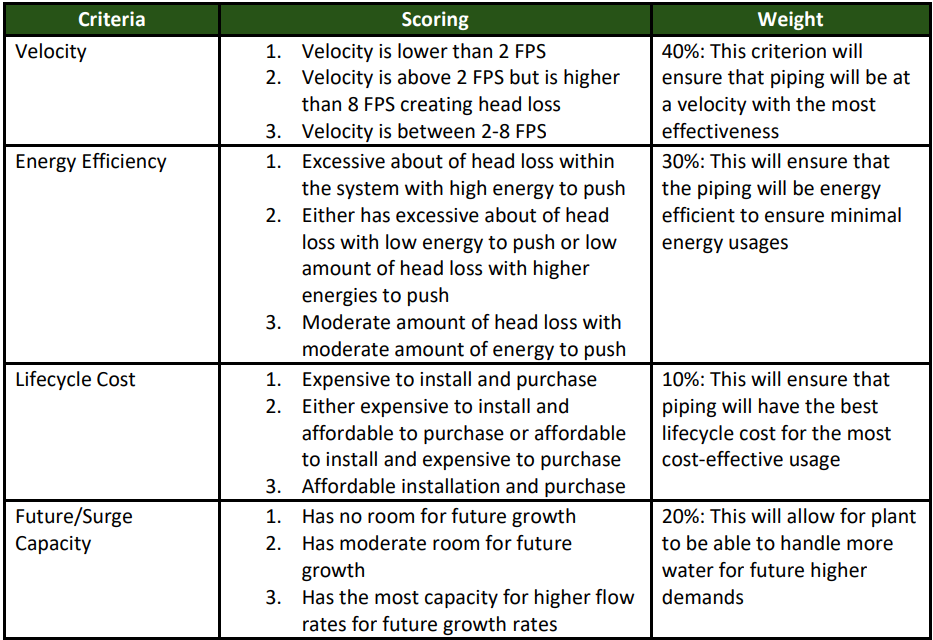
Review the weighted scoring criteria used to evaluate each alternative, prioritizing optimal velocity, total dynamic head efficiency, lifecycle cost, and future surge capacity.
Table 1: Pipe Diameter Scoring Criteria
Pipe Diameter Decision Matrix
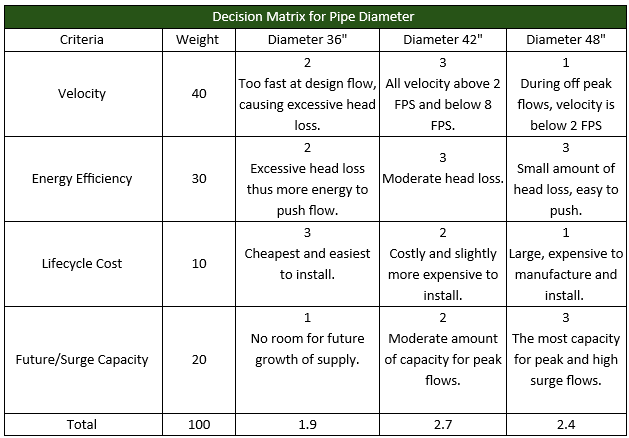
Below is the final decision matrix, which compares each pipeline diameter against the established performance criteria to find the most reliable option.
Table 2: Pipe Diameter Decision Matrix
Pipe Diameter Final Recommendation
The 42-inch diameter was ultimately selected, providing the ideal balance of a self-cleaning 5.98 FPS velocity, manageable friction headloss, and sufficient capacity for future flow surges.