IMPACTS
CJE assess impact created by the AWPF for environmental, social, and economics for AWPF final design. A triple bottom line (TBL) assessment was done for all treatment train alternative designs.
Environmental Impacts
POSITIVE:
NEGATIVE:
- Increasing water supply resilience
- Create a local, drought-resilient source of drinking water by turning reclaimed wastewater into a potable source, reducing the reliance on stressed surface water sources
- Protect ecosystems and aquatic habitats
- Use of energy
- Increase emission rates due to operations
- Construction would affect local ecosystem
Social Impacts
POSITIVE:
NEGATIVE:
- Public health protection by producing highly purified that meets health standards
- Produce reliable drinking water for users
- Support Phoenix's growing population and economic development by ensuring a stable water supply
- Provide education center for the public, which contributes understanding of potable reuse building, ultimately building trust
- Negative perception to AWPF due to "toilet to tap" stigma around potable reuse
- Construction may disrupt nearby neighborhood
- May disrupt traffic flow during construction
Economic Impacts
POSITIVE:
NEGATIVE:
- Long-term costs and savings
- Diversify a water supply and reduce vulnerability to water shortages and stabilize water rates over time
- Generate federal and local investment, which demonstrates economic commitment.
- Increase employment during design, construction, and plant operations
- The site will have a high capital and operating cost
- A long payback period may cause long-term debt
- Increase tax costs from tax payers
Triple Bottom Line
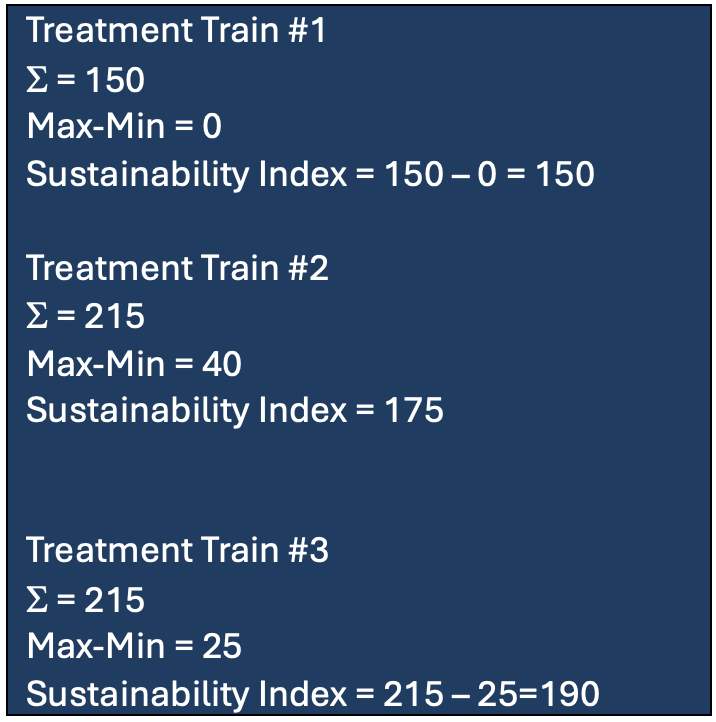
The TBL assessment is shown in the figures below. From the TBL, the most sustainable alternative, with a sustainability score of 190 is treatment train #3.